EXECUTIVE SUMMARY
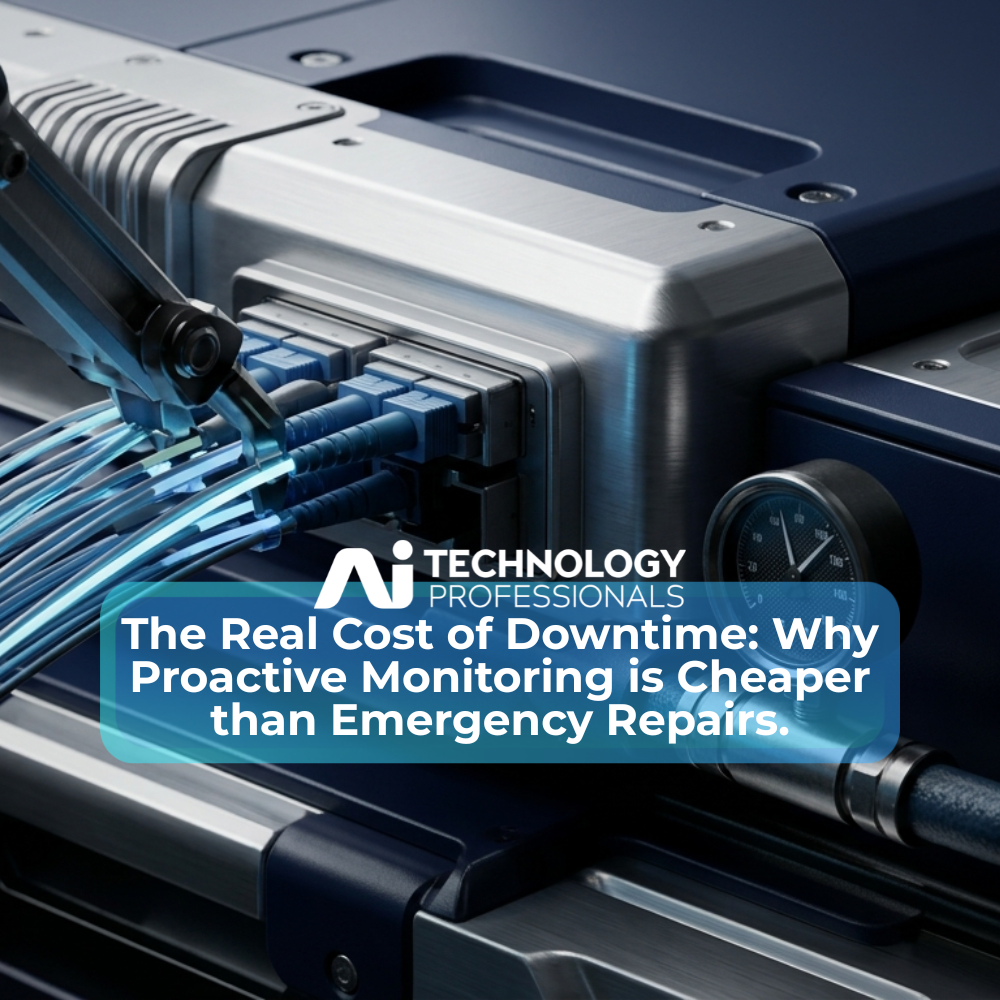
Modern enterprise stability hinges on the transition from reactive “break-fix” cycles to a state of continuous, predictive oversight. While emergency repairs incur compounding costs through lost productivity and brand erosion, proactive monitoring serves as a strategic hedge against the catastrophic financial impacts of unscheduled downtime.
KEY TAKEAWAYS
- Shift from Cost Center to Value Driver: Proactive monitoring transforms IT from a reactive expense into a strategic asset that preserves capital and ensures operational continuity.
- Mitigation of Compound Failure: Early detection prevents minor latency issues from cascading into systemic outages that jeopardize Data Integrity and RPO/RTO targets.
- Optimization of Human Capital: Shifting focus from emergency firefighting to scheduled maintenance allows high-value engineering talent to focus on innovation and scalability.
The Illusion of Savings in Reactive Maintenance
For many organizations, the decision to delay investment in comprehensive monitoring tools is often framed as a cost-saving measure. However, this perspective fails to account for the “Technical Debt” accrued during every hour of unmonitored operation. When an enterprise relies on a reactive posture, the first indication of a failure is typically a total service collapse. By the time an emergency repair begins, the organization has already incurred the maximum possible damage.
The cost of an emergency repair is never limited to the invoice of the technician or the price of the replacement hardware. It includes the “Dark Costs” of idle labor across the entire enterprise, the breach of Service Level Agreements (SLAs), and the potential loss of sensitive data. To understand the baseline requirements for securing these environments, leaders should consult the CISA Cross-Sector Cybersecurity Performance Goals, which emphasize the necessity of continuous visibility as a fundamental layer of risk management.
Quantifying the Financial Impact of Downtime
The financial burden of downtime is often calculated using a simplistic formula of lost revenue per hour. While functional, this ignores the deeper erosion of Enterprise Value. For C-Suite leaders, the focus must be on the RTO (Recovery Time Objective) and the RPO (Recovery Point Objective). In a reactive environment, these metrics are often dictated by luck rather than logic.
A proactive monitoring strategy utilizes telemetry and real-time analytics to identify “Quiet Failures”—discrepancies in system behavior that do not yet constitute a crash but signal an imminent breach of threshold. By addressing a failing storage controller or a memory leak during a scheduled maintenance window, the organization avoids the exponential surge in labor costs associated with emergency after-hours response. This data-driven approach aligns with the NIST Framework for Improving Critical Infrastructure Cybersecurity, which advocates for detection processes that provide timely discovery of cybersecurity events to ensure the impact of an incident is contained.

The Human Capital Tax
Emergency repairs exert a heavy toll on the technical workforce. High-velocity environments that live in a state of perpetual “Firefighting” see significantly higher rates of burnout and turnover among senior engineering staff. When a CTO or IT Director must pull their best architects away from long-term digital transformation projects to fix a preventable server outage, the true cost is the stagnation of the company’s competitive edge. Proactive monitoring restores the “Narrative of Control” to the IT department, allowing for a disciplined, scheduled approach to infrastructure lifecycle management.
Immutability and Air-Gapping: The Last Line of Defense
In the current threat landscape, downtime is increasingly caused by malicious actors rather than simple hardware failure. A proactive stance integrates security monitoring with operational monitoring. By employing a Zero-Trust architecture, organizations can monitor for unauthorized lateral movement long before a ransomware payload is detonated.
Proactive monitoring ensures that backups are not only running but are also “Immutable.” An immutable backup cannot be altered or deleted, even by an attacker with administrative privileges. Coupling this with “Air-Gapping”—physically or logically isolating a copy of the data—provides a definitive safety net. Understanding the technical nuances of these defenses is critical; for instance, the OWASP Top 10 Monitoring and Logging Risks highlights how insufficient logging and monitoring can leave an enterprise blind to active breaches, turning a minor intrusion into a permanent data loss event.
RPO and RTO: Moving Toward Zero-Downtime
The ultimate goal of proactive monitoring is the realization of a “Zero-Downtime” environment. While 100% uptime is a theoretical ideal, moving from “Three Nines” (99.9%) to “Five Nines” (99.999%) of availability requires a shift in how we view system health.
- Predictive Analytics: Using historical data to forecast when hardware will reach its Mean Time Between Failures (MTBF).
- Automated Remediation: Implementing scripts that can automatically restart services or reallocate resources the moment a threshold is crossed, often resolving the issue before a human is even alerted.
- Infrastructure as Code (IaC): Ensuring that if a failure does occur, the environment can be rebuilt from a known-good configuration in minutes rather than days.
This level of sophistication is no longer a luxury reserved for the Fortune 500; it is a baseline requirement for any business that relies on digital availability for its revenue stream.
Conclusion: The Long-Term Enterprise Value
Investing in proactive monitoring is an investment in the long-term viability of the enterprise. By reducing the frequency and severity of outages, leadership can protect the brand’s reputation, maintain high levels of employee productivity, and ensure that IT resources are focused on growth rather than survival. In the modern economy, the most expensive way to manage technology is to wait for it to break. True authority in the boardroom is demonstrated by the foresight to spend pennies on prevention to save millions in recovery.

Frequently Asked Questions (FAQs)
Why is proactive monitoring more cost-effective than emergency repairs?
Proactive monitoring prevents the exponential compounding of labor and productivity losses associated with total system failure. By identifying minor technical discrepancies early, organizations avoid the peak-hour service collapses that drive high emergency remediation invoices.
How does downtime affect long-term enterprise value?
Downtime erodes market reputation and accumulates technical debt that hinders future scalability. Beyond immediate revenue loss, frequent outages lead to higher talent turnover and lower valuation during due diligence or audits.
What role does monitoring play in cyber resilience?
Continuous oversight allows for the detection of unauthorized lateral movement before a payload is detonated. This early visibility is essential for maintaining data immutability and ensuring that recovery points remain uncorrupted.
What is the difference between RPO and RTO in this context?
RPO measures acceptable data loss, while RTO measures the duration of the service outage. Proactive systems tighten both metrics by ensuring backups are verified and infrastructure can be redeployed via automation.
Can proactive monitoring eliminate downtime entirely?
While absolute 100% uptime is a theoretical ideal, proactive systems achieve “Five Nines” (99.999%) availability. This is accomplished through predictive analytics and automated remediation that resolves issues before they impact the end-user.