Cyberattacks on government institutions are growing in frequency and impact. From ransomware to phishing, threat actors know that public agencies often operate on outdated systems, widening budgets, and stringent compliance regulations. Therefore, they are both attractive and easy to take advantage of.
However, agencies don’t have to approach government cybersecurity in a reactive manner. Through intelligent planning, agencies can reinforce their defense, reduce risk exposure, and develop quick responses to threats while they arise. The significant component is to assess what affects systems with risk and rectify that.
Now, let’s examine some of the more urgent public sector IT security challenges and how to address them.
Legacy Systems and Outdated Infrastructure
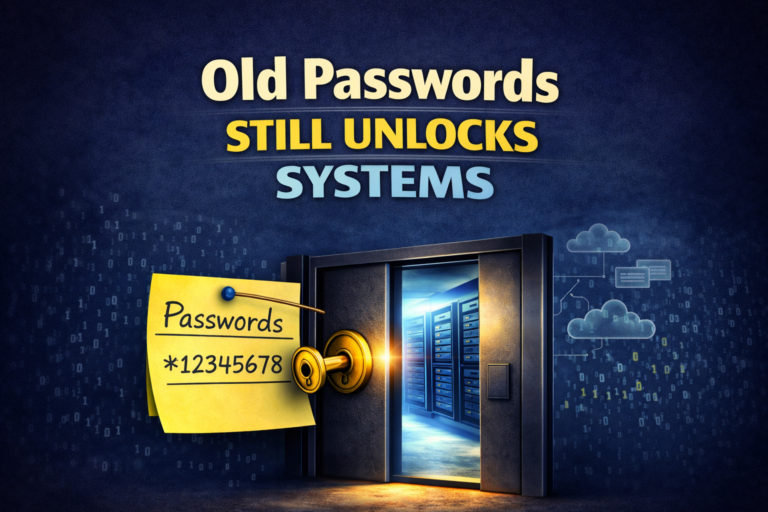
Several government IT environments still run on outdated hardware and software, some of which have not received support in years. A U.S. Government Accountability Office (GAO) report claims that nearly 80% of the federal IT budget goes toward maintaining these old systems.
Why is this important? Unsupported systems may lack basic security defenses such as regular patching or modern encryption, making them easy prey for cybercriminals. Coupling newer platforms with older ones can also create very subtle vulnerabilities that may be almost impossible to detect and mitigate.
Solution: To update their systems, agencies should make step-by-step plans. The first step should be to prioritize risk by listing systems and making plans for upgrades, such as moving to the cloud, virtualization, or replacing systems. Every upgrade should be aligned with compliance regulations, including NIST and FISMA frameworks.
Fragmented Security Practices Across Departments
Various departments within a government agency use different tools, vendors, and policies. Ultimately, monitoring threats from a holistic perspective becomes difficult due to inconsistent defenses.
Solution: Consolidating security policies will lead to the adoption of a centralized operations approach. A shared services model enables agencies to address their threats holistically. Implementing Zero Trust security, where access is continuously verified, can unify defenses across departments.
The Threat of Ransomware and Phishing
Ransomware always ends up being the biggest threat to government networks. Hackers hold public data hostage, highlighting the slow recovery processes of government agencies. Another thing is phishing, which is among the most significant attack vectors used by hackers to exploit human error and weak access controls.
Solution: Comprehensive training and endpoint protection for employees. Simulate phishing attacks and responses to improve learning. Install an endpoint detection and response (EDR) tool for real-time behavior monitoring. Use isolated, immutable storage for backup systems to prevent ransomware from spreading.
Cybersecurity Talent Shortages
The public sector has difficulty recruiting as many skilled cybersecurity professionals as possible. The salary caps in public employment, the financial and physical aspects of bureaucracy, and competition with the private sector mean that many roles go unfilled: a study found that 350% more jobs were opened for cybersecurity professionals all around the globe.
Solution: Upskill existing teams through certifications and professional development programs. Use automation and AI-driven security tools to minimize overhead strain on limited staff. For agencies looking at the best IT security solutions for government agencies, choose tools that reduce manual oversight and integrate threat intelligence into workflows.
Keeping Up with Compliance
All evolving compliance regulations, ranging from NIST and FISMA to FedRAMP and state mandates, apply to government agencies. Maintaining compliance with these in different places and between various systems is an ongoing activity, often draining resources from proactive security efforts.
Solution: Move to a security-by-design mentality, implement compliance-as-code tools, and automate regular audits where possible. This includes keeping government agencies compliant with required standards and embedding risk management in daily undertakings.
Insider Threats and Excessive Access
Malicious intent or accidental insider risks can be a critical concern in public sector IT security. Users may have more access than they need, and what they do with it is not visible.
Solution: Apply the principle of least privilege to all accounts. Use identity and access management (IAM) systems with behavioral analytics to detect anomalies. Multi-factor authentication (MFA) is required across all endpoints, especially for administrators.
For agencies exploring how government organizations can prevent cyber attacks, reducing internal risk is as important as blocking external ones.
Inconsistent Incident Response Plans
Having an incident response (IR) plan is not entirely sufficient. It must be up to date, tested, and tied to real scenarios. Too frequently, agencies have outdated playbooks that do not fix today’s threat landscape.
Solution: Create scenario-based IR plans for ransomware, phishing, and data breaches, as well as denial-of-service attacks. Rehearse quarterly with tabletop exercises. Leverage the Cybersecurity and Infrastructure Security Agency (CISA) guidance on performance goals to benchmark preparedness and continuous improvement.
Final Thoughts
Common IT challenges in government institutions have serious consequences for continued negligence. Public trust, operational continuity, and even national security are on the line. Fortunately, the solutions are clear, actionable, and within reach.
That is where the AI Technology Professionals can help. Our consultants are highly skilled cybersecurity and IT specialists who help public sector agencies navigate these issues with practical solutions for the future. Whether the aim is to ensure seamless identity and access management, integrate advanced threat intelligence, or provide visibility across multiple hybrid environments, we will assist along the way.
Together with AI Technology Professionals, design and implement secure, scalable, and compliant systems that meet current requirements and are built for long-term resilience.
Share this post