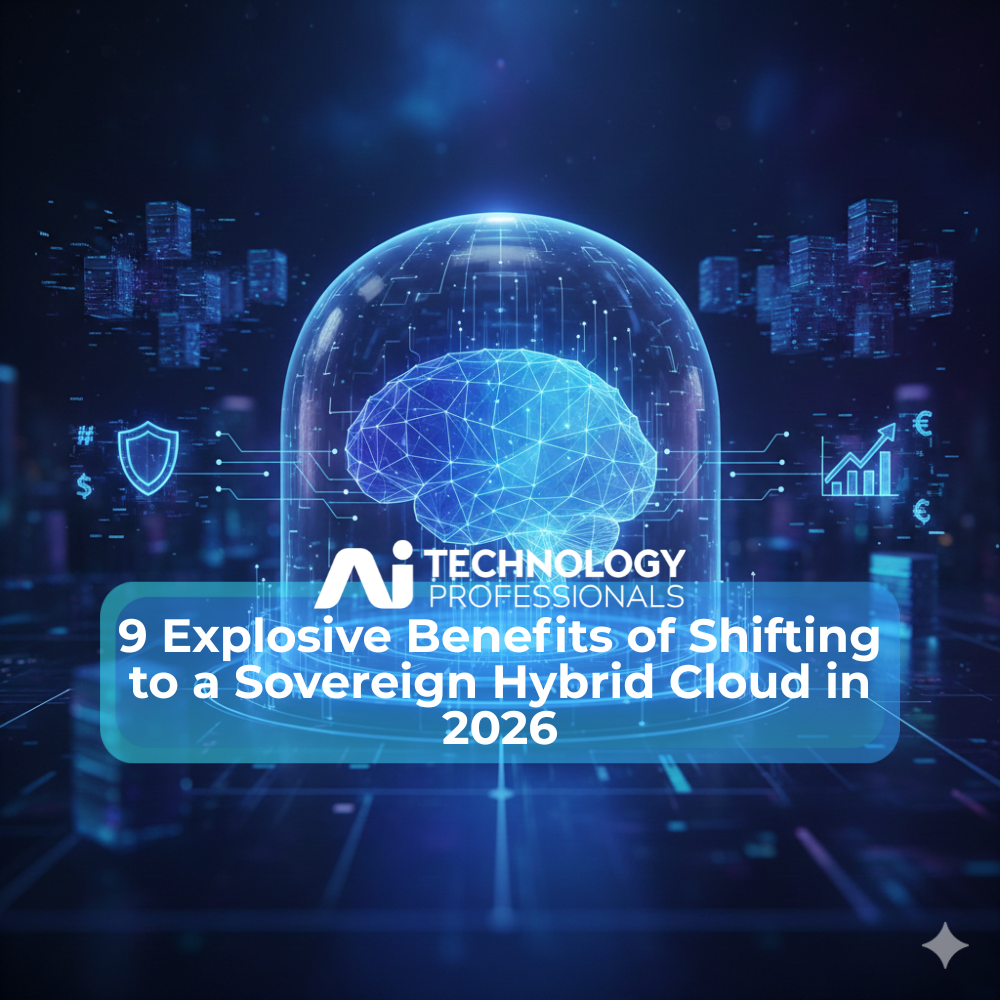
Introduction To 9 Explosive Benefits of Shifting to a Sovereign Hybrid Cloud in 2026
In 2026, the global technology landscape faces a massive and irreversible shift toward localized data control. Many enterprises now realize that standard public cloud models often fail to meet strict legal mandates and regional residency requirements. This realization drives the rapid adoption of a Sovereign Hybrid Cloud as a primary infrastructure strategy for forward-thinking organizations. In the current climate, businesses must navigate a complex world where data jurisdiction and digital autonomy define market leaders. Without a Sovereign Hybrid Cloud, staying ahead of these shifting regulatory tides becomes nearly impossible for modern IT departments.
Moving toward a Sovereign Hybrid Cloud is no longer a luxury reserved for the largest global corporations. Instead, it is a fundamental requirement for maintaining operational integrity and building long-term customer trust. This article explores nine explosive benefits that come from this strategic architectural shift. We will examine how a Sovereign Hybrid Cloud successfully balances the immense power of public resources with the absolute security of private, localized control. By choosing a Sovereign Hybrid Cloud, companies can ensure that their most sensitive assets are protected by the highest standards of digital law.
Furthermore, the rapid integration of artificial intelligence makes the transition to a Sovereign Hybrid Cloud even more urgent for competitive survival. Modern AI models require vast amounts of data that must remain protected under specific national laws to avoid intellectual property theft or legal exposure. Consequently, a Sovereign Hybrid Cloud provides the only viable path for scalable yet compliant innovation in the age of machine learning. Businesses that delay the transition to a Sovereign Hybrid Cloud risk falling significantly behind more agile and secure competitors who have already secured their data boundaries.
Additionally, the rise of stringent regional regulations like the Data Act in Europe forces a complete rethink of legacy digital systems. Adopting a Sovereign Hybrid Cloud allows for seamless adaptation to these changing legal environments without disrupting daily business operations. A Sovereign Hybrid Cloud offers the unique flexibility to move workloads across different zones while keeping sensitive information under strict local authority. Understanding these diverse benefits is the first critical step toward building a more resilient and compliant digital future through the power of a Sovereign Hybrid Cloud.
What Exactly is a Sovereign Hybrid Cloud
A Sovereign Hybrid Cloud represents an evolution in how businesses manage their digital assets. It is a model that combines public cloud scalability with the strict control of a sovereign private environment. Unlike traditional hybrid setups, a Sovereign Hybrid Cloud prioritizes jurisdictional authority over all data and operations. This means the data is not only stored locally but also remains subject only to local laws.
Furthermore, a Sovereign Hybrid Cloud ensures that no foreign government can claim access to sensitive information. Standard cloud providers often operate under international treaties that might compromise data privacy. Consequently, a Sovereign Hybrid Cloud uses specific technical and legal safeguards to prevent such unauthorized access. It creates a digital fortress where the organization maintains absolute ownership of its technology stack.
Additionally, this architecture supports the concept of digital sovereignty by reducing dependency on single global vendors. A Sovereign Hybrid Cloud utilizes open standards to ensure that workloads remain portable across different providers. This prevents vendor lock in and allows businesses to negotiate from a position of strength. By using a Sovereign Hybrid Cloud, companies can choose where their data lives based on risk and performance.
Finally, a Sovereign Hybrid Cloud is designed for the high demands of modern AI workloads. It allows for the training of proprietary models within a secure and local boundary. This ensures that intellectual property never leaks into public datasets. In essence, a Sovereign Hybrid Cloud is the ultimate tool for achieving both innovation and absolute compliance.
The Clear Benefits of a Sovereign Hybrid Cloud
The primary benefit of a Sovereign Hybrid Cloud is the ability to keep data within specific legal borders. This ensures that every bit of information follows national privacy mandates without exception. Furthermore, a Sovereign Hybrid Cloud eliminates the risk of data being seized by foreign entities under cross border laws. Consequently, businesses can operate in highly regulated sectors like finance or healthcare with total confidence because the Sovereign Hybrid Cloud keeps them in compliance.
A Sovereign Hybrid Cloud ensures that every transaction and record remains under local jurisdiction. By utilizing a Sovereign Hybrid Cloud, organizations can avoid the legal ambiguities associated with standard global providers. This makes the Sovereign Hybrid Cloud an essential tool for maintaining digital sovereignty.
- Sovereign Hybrid Cloud ensures compliance with GDPR and local data acts.
- Sovereign Hybrid Cloud prevents unauthorized access from foreign government agencies.
- Sovereign Hybrid Cloud keeps sensitive customer information within trusted boundaries.
- Sovereign Hybrid Cloud provides clear evidence of data residency for regulatory audits.
Total Jurisdictional Control Over Sensitive Data
The primary benefit of a Sovereign Hybrid Cloud is the ability to keep data within specific legal borders. This ensures that every bit of information follows national privacy mandates without exception. Furthermore, utilizing a localized digital framework eliminates the risk of data being seized by foreign entities under cross border laws. This is particularly important because standard public cloud agreements often contain clauses that might allow for international data requests. By maintaining an autonomous environment, an organization ensures that its digital assets remain under the sole jurisdiction of local authorities. Consequently, businesses can operate in highly regulated sectors like finance or healthcare with total confidence.
Operating within such a secure, sovereign-ready architecture allows a company to build a resilient legal posture. It provides a technical guarantee that sensitive information is not only stored locally but is also governed by the specific rules of the host country. This level of control is essential for any enterprise that handles proprietary research, citizen records, or high-value financial transactions. By removing the ambiguity of where data lives and who can access it, the organization creates a transparent and audit-ready environment.
- Full Regulatory Alignment: It ensures comprehensive compliance with the GDPR in Europe and various local data acts across the globe.
- Protection from External Interference: This model prevents unauthorized access or data requests from foreign government agencies.
- Securing the Customer Relationship: It keeps sensitive customer information within trusted boundaries to maintain brand integrity.
- Simplified Compliance Reporting: The architecture provides clear, undeniable evidence of data residency during strict regulatory audits.
Accelerated AI Innovation and Model Security
A Sovereign Hybrid Cloud provides a secure environment for developing and running advanced AI models. In 2026, the competitive value of a company often lies within its proprietary data and unique algorithms. By using this localized infrastructure, organizations can train artificial intelligence systems without exposing their corporate secrets to the public internet or third-party providers. This level of isolation is critical because it ensures that the training data remains confidential throughout the entire development lifecycle. Additionally, this setup allows for low latency processing by keeping high-volume data sets physically close to the compute resources.
When companies leverage an autonomous AI environment, they can achieve a level of precision and speed that is not possible on standard public platforms. This architecture enables the use of specialized hardware within a private zone, which is essential for processing the massive workloads required by modern generative models. By maintaining control over the entire stack, from the hardware to the algorithm, businesses can innovate at a rapid pace while adhering to strict national security standards. This approach essentially creates a safe harbor for innovation, where the risk of intellectual property leakage is virtually eliminated.
- Intellectual Property Safeguards: It protects valuable trade secrets and proprietary code during the critical AI training phase.
- Optimized Performance Metrics: This model reduces data transfer times to ensure near-instantaneous results for real time AI inference.
- Hardware Customization: It allows for the integration of specialized processing units and accelerators within private, secure zones.
- Regional Market Specialization: The framework supports the creation of industry specific sovereign AI solutions that meet local cultural and legal requirements.
Enhanced Operational Resilience and Continuity
Business continuity is significantly improved through a Sovereign Hybrid Cloud architecture. This model prevents a single point of failure by strategically distributing workloads across both sovereign private zones and scalable public zones. Furthermore, adopting a localized network architecture allows for rapid failover to local servers if global networks face sudden disruptions or connectivity issues. This ensures that the most vital operations of an enterprise are not dependent on a single, distant data center. Consequently, critical services remain online and accessible even during periods of geopolitical tensions or major international infrastructure outages.
By utilizing such a resilient digital framework, organizations can maintain a consistent level of service regardless of external pressures. The ability to shift traffic between local and global environments provides a layer of protection that standard cloud models simply cannot match. This approach also allows IT teams to isolate specific problems within one jurisdiction without affecting the performance of the entire global network. In 2026, where digital uptime is directly tied to brand reputation, having this level of autonomy is essential for any business that operates across multiple borders.
- Multi-Jurisdictional Redundancy: It provides essential backup systems across multiple geographic locations and distinct legal jurisdictions.
- Mission Critical Reliability: This setup offers the ability to run high-priority applications on local private infrastructure to ensure 24/7 availability.
- Rapid Disaster Recovery: The model facilitates much faster recovery times after localized cloud service failures by using pre-configured local failover points.
- Autonomous Operational Control: It grants independent control over maintenance windows and update schedules so that global provider outages do not dictate your business hours.
Strategic Cost Optimization and FinOps Control
Managing cloud spend is much easier when using a Sovereign Hybrid Cloud strategy. It allows businesses to move their predictable, steady state workloads to lower cost sovereign private environments where resource usage can be tightly controlled. Meanwhile, the public portion of this localized cloud strategy handles temporary spikes in demand or rapid experimentation. This balanced approach prevents the high costs that are often associated with massive data egress fees and the unpredictable nature of public cloud pricing. By separating workloads based on their cost profiles, organizations can ensure that they are not overpaying for the flexibility of the public cloud when it is not strictly necessary.
Implementing such a sovereign-ready framework provides a level of fiscal clarity that is often missing in purely public environments. Finance teams can more accurately forecast their annual IT budgets because a significant portion of the infrastructure is hosted on predictable, local resources. This shift also creates a buffer against the fluctuating exchange rates and regional price hikes that can occur with global providers. In 2026, the ability to maintain a lean and efficient digital operation is a key differentiator between profitable enterprises and those struggling with escalating technical overhead.
- Egress Cost Mitigation: It significantly reduces the reliance on expensive public cloud egress charges by keeping high-volume data movement within local boundaries.
- Predictable Hardware Investment: This model utilizes existing on premises hardware or dedicated local servers to provide a foundation of predictable, fixed costs.
- Increased Vendor Leverage: The flexibility to move workloads allows for much better negotiation with public cloud vendors who must compete for your business.
- Detailed FinOps Visibility: It enables granular tracking of spending across different cloud zones to ensure every dollar is spent on the most efficient resource possible.
The High Cost of Ignoring Sovereign Hybrid Cloud
Failing to adopt a Sovereign Hybrid Cloud carries significant risks in the modern economy. Organizations that rely solely on public clouds may find themselves in violation of new laws. Ignoring the need for a Sovereign Hybrid Cloud can lead to financial loss and reputational damage.
Severe Regulatory Fines and Legal Penalties
Without a Sovereign Hybrid Cloud, companies are increasingly vulnerable to massive fines for complex data transfer violations. Regulators in 2026 have become far more strict about exactly where personal data is stored and which individuals or entities can access it. Consequently, the lack of a localized infrastructure model can result in penalties that equal a significant percentage of total global revenue. These legal battles are often long, incredibly expensive, and potentially devastating for any brand that relies on public trust. By failing to secure their data within a recognized sovereign boundary, organizations essentially leave themselves open to the shifting whims of international privacy litigation.
Furthermore, the absence of an autonomous digital framework creates a high-risk environment where administrative errors can lead to systemic failures. Regulatory bodies no longer accept ignorance of data location as a valid defense, which means that oversight can lead to immediate and harsh sanctions. In many cases, these legal challenges do not just result in one-time payments; they often require a complete and costly overhaul of the existing technical stack. Businesses that do not prioritize jurisdictional control today are essentially gambling with their future ability to operate in key international markets.
- Heightened Compliance Risks: This oversight increases the likelihood of non-compliance with strict data residency laws and evolving regional privacy mandates.
- Service Interruptions: A failure to meet local standards often leads to the forced shutdowns of non-compliant digital services until full remediation is achieved.
- Compounded Legal Expenses: The lack of a secure framework creates high legal fees stemming from the need to defend against aggressive privacy lawsuits.
- Threats to Market Access: Neglecting sovereignty risks the permanent loss of business licenses in specific geographic regions that prioritize data protection.
Critical Loss of Customer Trust and Brand Equity
Customers in 2026 are highly aware of their data privacy rights and are more informed than ever about where their information is processed. If an enterprise does not use a Sovereign Hybrid Cloud, customers may fear that their personal or corporate data is being monitored by foreign powers without their consent. This skepticism creates a significant barrier to adoption for new products and services. Furthermore, a major data breach occurring within a non-sovereign environment can destroy years of careful brand building in a single afternoon. Consequently, the absence of a Sovereign Hybrid Cloud makes it increasingly difficult to win and retain high-value clients who prioritize digital safety as a non-negotiable requirement.
Building a brand in the modern era requires a transparent commitment to data ethics. When a company fails to implement a localized data strategy, it sends a message that it is not fully in control of its own digital destiny. High-value clients, particularly those in the enterprise and government sectors, often conduct deep technical audits before signing contracts. If they discover that their data will be subject to the laws of a foreign jurisdiction, they are likely to take their business elsewhere. By contrast, organizations that lead with a sovereign-ready infrastructure can use their technical posture as a powerful marketing tool to differentiate themselves from less secure competitors.
- Erosion of Brand Integrity: A lack of jurisdictional control weakens the fundamental brand promise of providing total security and user privacy.
- Increased Customer Churn: This vulnerability causes existing customers to migrate toward more secure sovereign competitors who can guarantee local data residency.
- Diminished Marketing Impact: The absence of a secure framework reduces the overall effectiveness of marketing efforts that are focused on building long-term trust.
- Reputational Damage: Reliance on non-sovereign systems often results in severe negative press coverage during public data jurisdiction disputes or cross-border legal battles.
Dangerous Levels of Vendor Lock In and Dependency
Relying on a single public cloud provider without a Sovereign Hybrid Cloud strategy creates a dangerous level of dependency that can compromise an organization’s long-term autonomy. This specific type of vendor lock-in allows providers to raise prices or unilaterally change service terms without the fear of losing the customer to a competitor. Furthermore, a Sovereign Hybrid Cloud provides the essential exit strategy needed to maintain business leverage during contract negotiations. By ensuring that data and applications are not tethered to a single proprietary ecosystem, companies can maintain the upper hand. Consequently, those who lack a diversified infrastructure model are often at the mercy of their provider’s roadmap and aggressive pricing updates.
Building a business on a foundation of proprietary tools often leads to a “walled garden” effect where the cost of leaving exceeds the cost of staying, even as service quality declines. An autonomous cloud architecture breaks this cycle by prioritizing open standards and local interoperability. This flexibility ensures that an enterprise can pivot its technical strategy in response to market changes or better pricing opportunities elsewhere. In 2026, where market agility is a primary driver of success, avoiding these deep dependencies is not just a technical preference but a financial necessity.
- Platform Immobility: This dependency leads to an inability to move critical workloads to more efficient or cheaper platforms when better options emerge.
- Accumulated Technical Debt: Organizations often face high technical debt resulting from the heavy use of proprietary public cloud tools that do not translate to other environments.
- Budget Instability: Lack of an exit strategy leads to direct exposure to price hikes that often outpace the pre-approved annual IT budget.
- Geopolitical and Market Risks: There is a constant risk of service discontinuation if a global provider decides to exit a specific geographic market due to regulatory or political shifts.
Stifled Innovation and Slow Market Adaptation
Organizations that ignore the Sovereign Hybrid Cloud model often move significantly slower than their more agile peers. They frequently find themselves trapped in a cycle of reactive governance, where too much time is spent worrying about compliance hurdles rather than building and launching new products. Furthermore, a Sovereign Hybrid Cloud provides a unique structural advantage by allowing for rapid testing in the public zone and secure, compliant deployment in a protected private zone. This dual-zone approach creates a streamlined pipeline for innovation. Consequently, without a localized infrastructure strategy, the path from initial idea to final production is often filled with expensive legal delays and technical roadblocks that can stall a project for months.
The ability to separate development from production using a sovereignty-focused model ensures that innovation does not come at the cost of security. Businesses that rely on traditional, non-sovereign setups often face “analysis paralysis” because every new feature must be vetted against a complex web of international data laws. By contrast, a localized deployment strategy provides a pre-approved environment where developers can work with confidence. In the fast-paced market of 2026, the speed at which a company can turn a concept into a compliant reality is often the deciding factor in its long-term survival.
- Delayed Product Launches: This lack of structure leads to significant delays in launching new products that require the processing of sensitive or regulated data.
- Compliance Inefficiency: It results in a massive increase in the time and human resources spent on manual compliance checks and repetitive regulatory audits.
- Integration Barriers: Organizations face increasing difficulty when trying to integrate new regional technologies or local data sources that require strict jurisdictional residency.
- Erosion of Market Position: There is a rapid loss of competitive edge to rival companies that are already utilizing sovereign architectures to move faster and more securely.
Conclusion
The shift toward a Sovereign Hybrid Cloud is the defining infrastructure trend of 2026. This model offers the perfect balance between the innovation of the public cloud and the security of local control. By embracing this localized architecture, businesses can protect their sensitive data, empower their internal AI initiatives, and reduce overall operational costs. It is a strategic move that prepares an organization for a complex and highly regulated digital future. As digital borders become more defined, having an adaptable framework ensures that a company can scale globally while remaining anchored in local compliance. This approach allows leadership to leverage the speed of global providers without sacrificing the legal certainty required by modern governments.
Furthermore, the benefits of this autonomous framework extend to every department, including legal, finance, and engineering. It provides a foundation of trust that is essential for modern customer relationships. In an era where data privacy is a top priority for consumers, providing verifiable residency is a significant competitive advantage. Legal teams can navigate regional mandates with greater ease, while finance departments benefit from more predictable cost structures. Consequently, every forward thinking leader should prioritize the implementation of a secure, sovereign ready architecture today. Taking action now ensures that your organization remains resilient against shifting geopolitical tides. Do not let your business be caught on the wrong side of the digital sovereignty divide, as the cost of technical debt and non compliance will only continue to rise.