
Hook: “This Email Looks… Actually Pretty Good”
If phishing scams are supposed to trick people, why do so many still look so bad?
You’ve seen them. Weird wording. Off-brand logos. Messages that just feel off.
Most of the time, they’re easy to spot.
But that’s starting to change.

The Problem: Phishing Is Getting More Convincing
For years, phishing has been a numbers game.
Same email. Same fake login page. Sent to thousands of people, hoping a few click.
That still happens. We see it all the time with businesses around Richmond and Central Virginia.
But here’s where it becomes a problem.
Attackers are starting to move away from one-size-fits-all scams and toward something more personalized and harder to detect.
Not perfect. Just convincing enough.
And that’s all they need.

Simple Explanation: A Smarter Kind of Fake Website
There’s been a lot of talk about “dynamic websites” over the years.
The idea is simple. Instead of showing the same page to everyone, the site builds itself based on who’s visiting.
Most businesses never really adopted this. It’s complex and not always worth the effort.
But cybercriminals don’t need perfect systems.
They just need something that works.
Here’s what security researchers are starting to show.
A user clicks a link and lands on what looks like a normal webpage. Nothing obviously malicious.
But once the page loads, it quietly uses legitimate AI tools to generate content in real time.
That content is built right in the user’s browser.
So instead of one fake website, you get a brand-new version every time.
Different wording. Different layout. Slightly different code.
That sounds fine until you realize what it means.
There’s nothing consistent for security tools to block ahead of time, because the scam doesn’t fully exist until someone opens it.

Real-World Example: How This Could Play Out
Let’s say you run an accounting firm in Glen Allen.
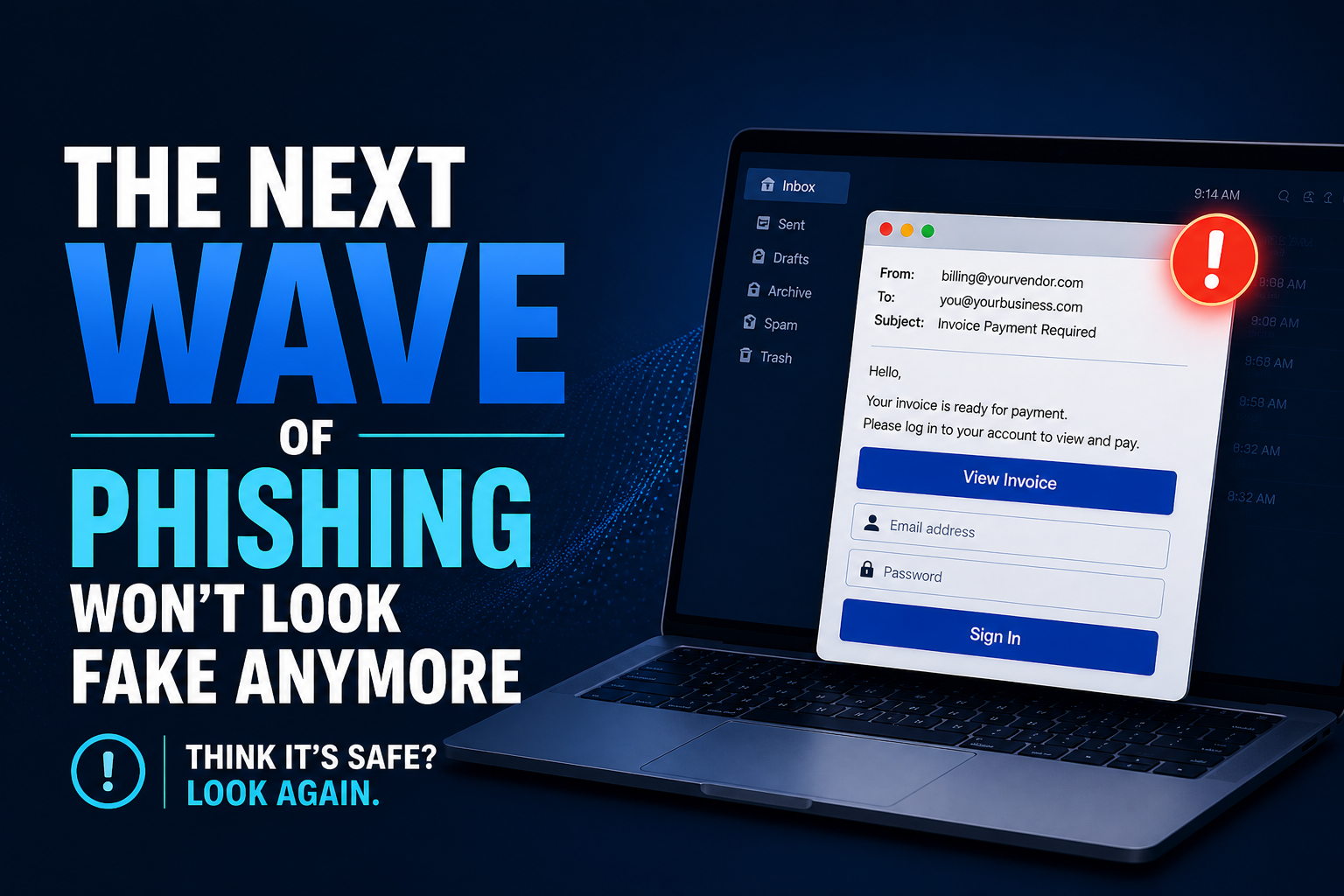
One of your team members gets an email that looks like it’s from a vendor. Clean branding. No typos. Nothing suspicious.
They click the link.
The page loads and looks like a normal login screen. Maybe even tailored to their device or location.
Because it was.
Behind the scenes, that page was generated specifically for them in that moment.
No obvious red flags. No sloppy design.
Just a convincing request to log in.
That’s all it takes.

The Solution: Shift the Focus From Prevention to Protection
Now, before this turns into panic, take a breath.
This type of attack isn’t widespread yet. But the pieces are already here.
AI is being used to write more convincing messages. Malware is getting more flexible. Phishing is getting smarter.
So the approach needs to evolve a bit.
It’s no longer just about telling your team, “Don’t click anything suspicious.”
Because soon, it may not look suspicious at all.
Here’s what actually helps:
- Multi-factor authentication
Even if credentials are stolen, this adds another layer that blocks access.
- Secure browsers and endpoint protection
These help catch unusual behavior, even when a page looks legitimate.
- Strong email filtering
Still important. It reduces the number of threats that even reach your team.
- User awareness training
Not fear-based. Just helping people slow down and think before entering credentials.
- Limiting access where possible
If one account is compromised, it shouldn’t open the entire business.
This is about reducing risk and limiting damage, not expecting perfection.

Key Takeaways
- Phishing isn’t going away. It’s evolving
- Future scams may look polished, personalized, and completely legitimate
- AI is making it easier for attackers to create convincing content
- Traditional “spot the bad email” advice is no longer enough on its own
- Modern protection focuses on limiting damage if something gets through

CTA: Let’s Take a Look at Where You Stand
If you’re like most businesses we talk to around Central Virginia, you’re relying on a mix of tools and user awareness to stay protected.
That’s a good start.
But with how fast this is changing, it’s worth asking a simple question.
If someone on your team did click the wrong thing, what happens next?
If you’re not sure, we can help you figure that out.
No pressure. Just a real conversation about where things stand and what makes sense for your business.