- The Flaw: SMS-based Multi-Factor Authentication (MFA) is no longer a security baseline; SIM-swapping and adversary-in-the-middle (AiTM) phishing have made it a liability.
- The Shift: Regulatory frameworks and cyber insurance providers are rapidly choking off compliance for companies relying on legacy telecom-based verification.
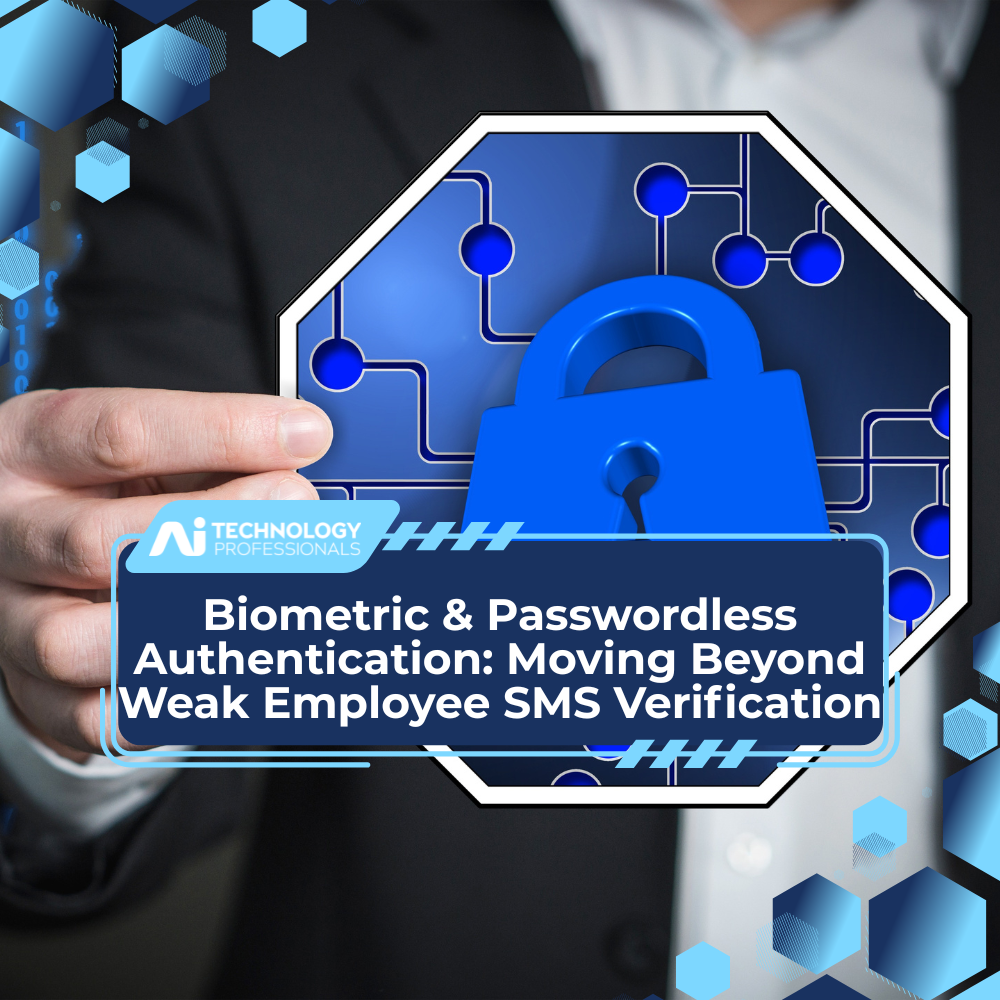
- The Solution: Transitioning to cryptographic passwordless architecture (FIDO2/WebAuthn) and hardware-backed biometrics eliminates the human vector entirely.
- The ROI: Beyond defense, removing passwords slashes helpdesk ticket volumes by up to 40% and friction from daily executive and employee workflows.
Enterprise perimeter defense is failing because the entry point is inherently flawed. For years, IT departments treated SMS-based verification as a reliable second factor, but modern threat actors bypass telecom-dependent MFA with ease.
To secure distributed infrastructure, organizations must migrate to phishing-resistant architectures. True security requires eliminating shared secrets entirely in favor of cryptographic, device-bound authentication.
The Fatal Vulnerabilities of Legacy SMS MFA
Cellular networks were never architected to handle secure authentication. Cybercriminals routinely exploit the underlying SS7 signaling protocol or execute basic social engineering to hijack employee phone numbers via SIM-swapping.
Furthermore, reverse-proxy phishing kits automate the interception of one-time passcodes in real time. When an employee enters an SMS code into a spoofed login page, the attacker steals both the credential and the session token simultaneously.
“Relying on SMS for MFA is offering your organization a false sense of security. If your second factor can be intercepted via a phone call to a telco representative, it is not a security boundary.” — Enterprise Cybersecurity Analyst
Implementing Phishing-Resistant Architecture: FIDO2 and WebAuthn
Phishing-resistant authentication decouples identity verification from human memory and telecom networks. The FIDO2 standard relies on public-key cryptography, ensuring credentials never leave the user’s physical device.
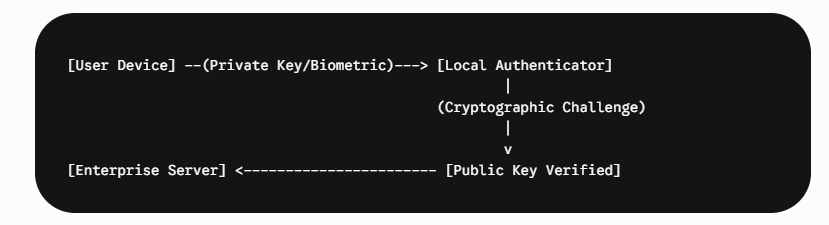
During authentication, the origin server issues a cryptographic challenge that only the employee’s registered hardware can sign. Because the private key is bound to the specific domain, a user cannot accidentally authenticate on a phishing site.
Authentication Framework Comparison
| Authentication Method | Phishing Resistance | Implementation Friction | Deployment Cost |
| Authentication Method | Phishing Resistance | Implementation Friction | Deployment Cost |
| SMS / Voice OTP | Low (Vulnerable to AiTM) | Low | Low |
| Authenticator Apps (TOTP) | Medium (Vulnerable to Push Fatigue) | Low | Low |
| Biometrics (Passkeys) | High (Device-Bound) | Very Low | Medium |
| Hardware Keys (YubiKey) | Highest (Cryptographic) | Medium | High |
Balancing Security with Executive and Employee Workflow
Security protocols fail when they introduce unsustainable friction. Biometric passkeys leverage the hardware already in your employees’ hands, such as Apple TouchID, Windows Hello, or Android biometrics, to authenticate in under two seconds.
This approach replaces the tedious cycle of password creation, expiration, and reset requests with a single biometric gesture. Enterprises deploying passwordless systems report immediate operational savings through reduced identity-related helpdesk queues.
Pro-Tip: When transitioning to passwordless, initiate a phased rollout starting with high-risk targets. Deploy hardware security keys to your finance, DevOps, and executive teams first before scaling to the broader organization.
Deploying the Capital Migration Strategy
Transitioning a legacy enterprise architecture to a passwordless model requires a structured, multi-phase approach to avoid operational disruption.
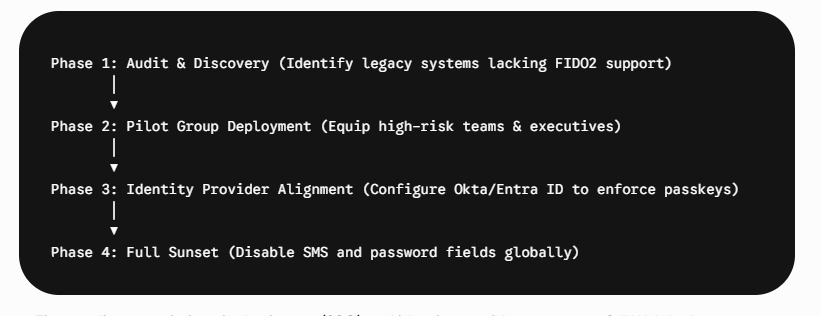
First, audit your existing single sign-on (SSO) and identity providers to ensure full WebAuthn support. Then, configure conditional access policies to mandate phishing-resistant factors while systematically deprecating SMS options.
Executive Action Checklist
- [ ] Audit: Identify what percentage of your workforce currently relies on SMS or voice-call MFA.
- [ ] Review: Check your cyber insurance policy clauses regarding “phishing-resistant MFA” requirements for compliance.
- [ ] Provision: Budget for physical hardware security keys as a fallback for employees without biometric-capable corporate devices.
- [ ] Update: Revise password rotation policies to allow longer lifespans for accounts protected by FIDO2 authenticators.