A lot of businesses think they’re still “testing” AI.
Then you start asking a few questions.
Who approved that customer response?
Why was that invoice routed differently?
Who decided that lead should be prioritized?
And suddenly the answer isn’t always a person.
More often, it’s a mix of software, automation, and AI working together behind the scenes.
That’s where things get interesting.
Most people picture AI as a chatbot sitting in a browser window waiting for instructions. But that’s not where things are heading.
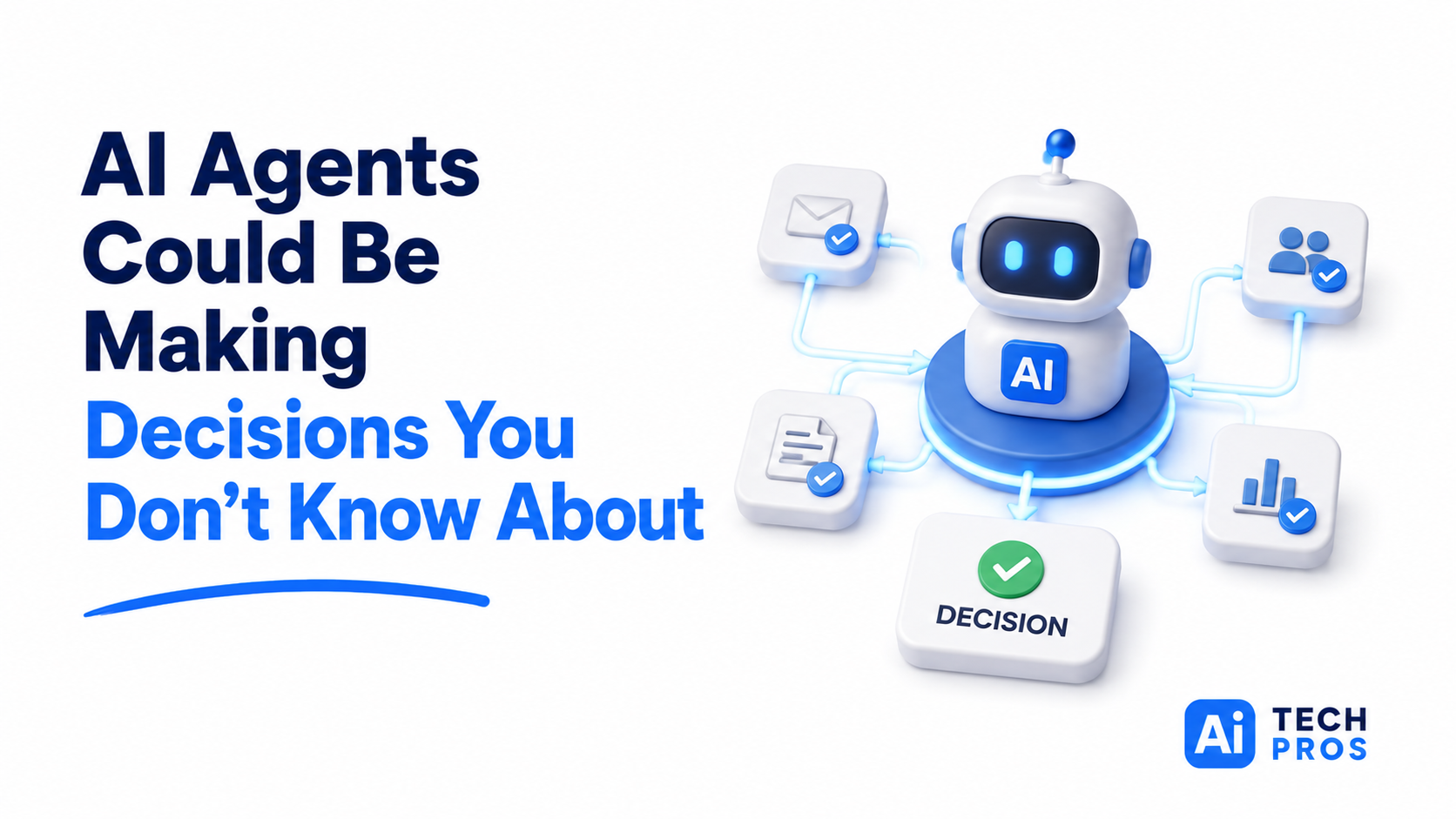
The newer generation of AI tools is being built directly into business processes. They’re reading emails, summarizing meetings, updating records, routing requests, generating content, and increasingly making recommendations that employees simply approve and move forward.
Sometimes those recommendations are excellent.
Sometimes they’re not.
The challenge is that the influence can grow gradually enough that nobody notices how much decision-making has shifted.
A marketing team enables an AI feature in its CRM.
Customer service adds automated responses.
Finance starts using AI-generated summaries.
Operations connects a few workflows together.
None of those decisions seem significant on their own. Six months later, AI is touching dozens of processes across the organization.
And that’s usually when leadership starts asking questions.
Not because AI is causing problems, but because someone wants to understand how something happened.
Why did this customer receive that message?
Why was this request escalated?
Why did this information end up in that system?
If the answer requires three departments, four applications, and a lot of guesswork, you’ve got a visibility problem.
One thing we’ve noticed is that businesses often spend more time documenting who has access to a system than documenting how decisions flow through it. As AI becomes part of those workflows, understanding that flow becomes just as important as understanding user permissions.
The accountability side gets tricky too.
When an employee makes a poor decision, ownership is usually straightforward.
When an AI-assisted process contributes to a poor outcome, things get fuzzy very quickly.
Was it the employee who approved it?
The manager who designed the workflow?
The software vendor?
The data feeding the AI?
The reality is that customers, regulators, and leadership teams generally aren’t interested in sorting through that debate after the fact. They simply want a clear explanation of what happened and who owns the process.
That’s why visibility matters.
Not because AI is dangerous.
Not because every automated decision creates risk.
Because businesses operate better when they understand how work gets done.
AI is becoming part of everyday operations whether organizations actively adopt it or not. Many of the platforms businesses already use are adding AI capabilities every month.
The companies that benefit most won’t necessarily be the ones using the most AI.
They’ll be the ones that know where it’s being used, what it’s allowed to do, and where a human still needs to be involved.
Share this post