Executive Summary
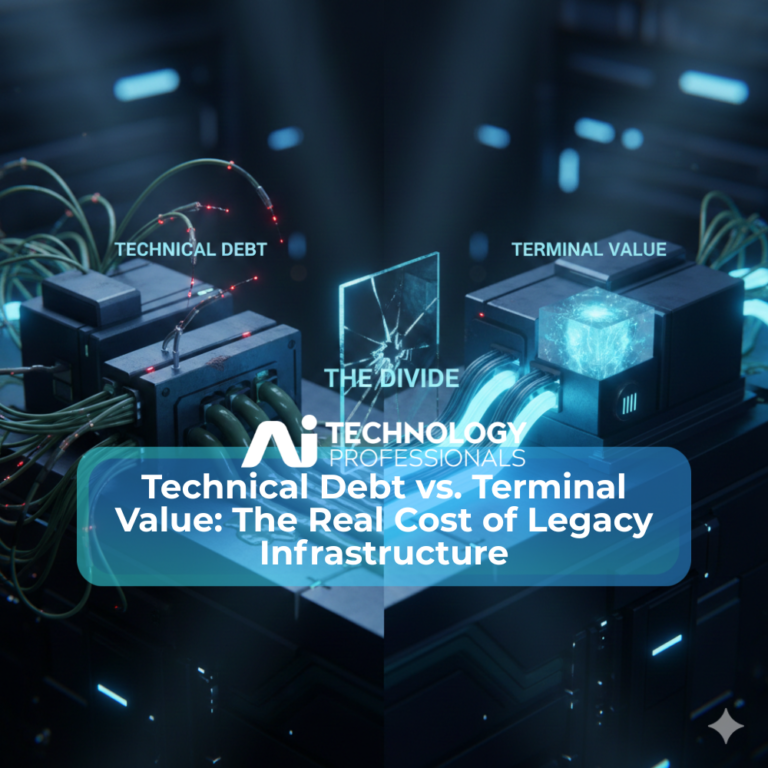
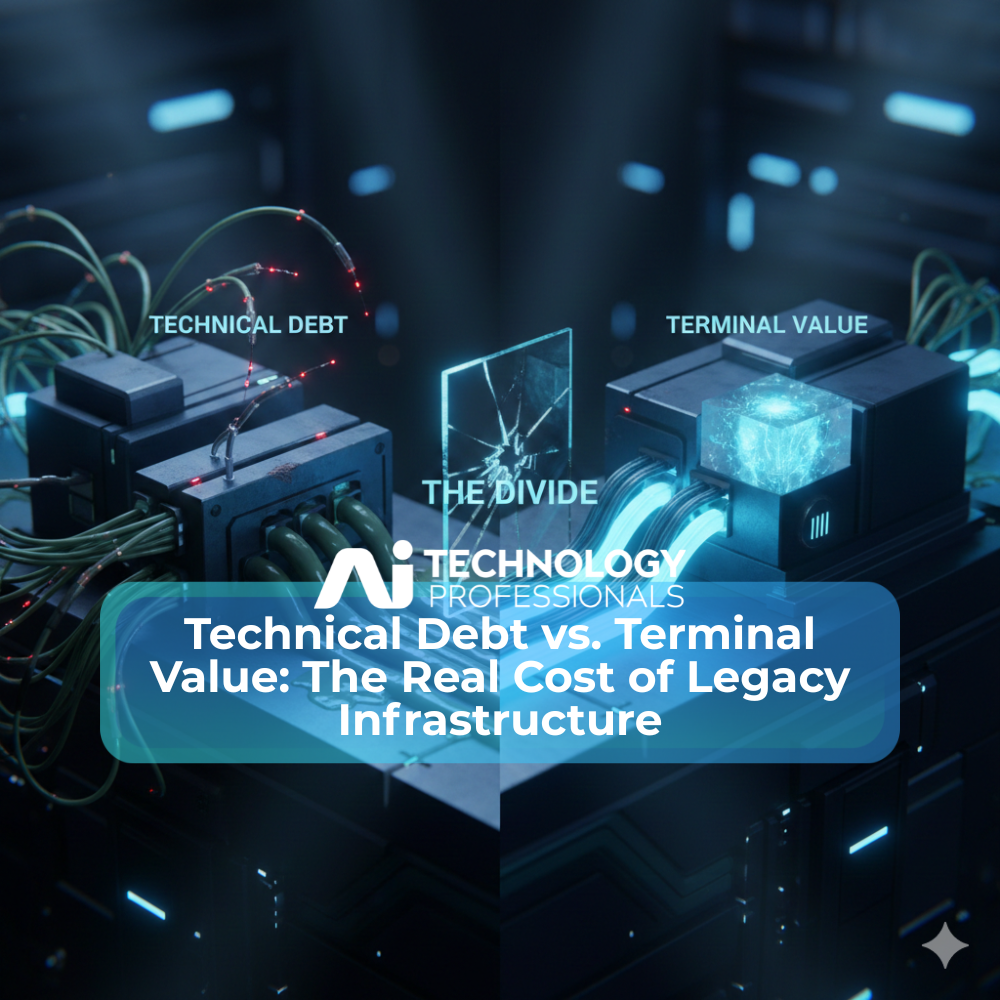
Modern enterprise resilience is increasingly compromised by “Legacy System Risk,” where the cost of maintaining antiquated infrastructure outpaces the ROI of digital transformation. This technical deep-dive outlines the transition from manageable technical debt to systemic terminal value loss, providing a framework for aggressive architectural modernization.
Key Takeaways
- The Velocity Gap: Legacy systems create a compounding “tax” on innovation, where 70-80% of IT budgets are consumed by maintenance rather than value creation.
- Risk Quantization: Failure to modernize is no longer a performance issue; it is a cybersecurity vulnerability that bypasses modern Zero-Trust protocols.
- Strategic Decommissioning: True enterprise value is reclaimed by treating infrastructure as a depreciating asset with a hard “expiration date” rather than an indefinite utility.
The Anatomy of Legacy System Risk
In the boardroom, “Legacy” is often whispered as a synonym for “reliable.” To the Architect, however, legacy represents a widening surface area for catastrophic failure. Legacy System Risk is defined by the divergence between current operational requirements and the inherent limitations of aging software and hardware stacks.
As hardware reaches End-of-Life (EOL) and software enters End-of-Support (EOS), the enterprise loses the ability to patch vulnerabilities. This creates a vacuum that sophisticated threat actors exploit. According to the Cybersecurity & Infrastructure Security Agency (CISA), maintaining unsupported software is a primary vector for ransomware and data exfiltration, as these systems often lack the telemetry required for modern detection. For an evidence-based framework on identifying these vulnerabilities, leaders should consult the CISA Known Exploited Vulnerabilities Catalog.
The Compounding Cost of Technical Debt
Technical debt is not inherently a failure; it is a strategic loan taken against future development. However, when left unserviced, this debt reaches a “terminal” state. At this stage, the integration of modern APIs or cloud-native microservices becomes mathematically impossible without a complete rebuild.
The financial friction manifests in three specific areas:
- Talent Scarcity: The cost of hiring engineers proficient in COBOL, older versions of Java, or proprietary mainframe languages is skyrocketing as the labor pool retires.
- Operational Rigidity: The inability to pivot business logic in response to market shifts.
- Fragmented Data Silos: Legacy systems often act as “black boxes,” preventing the real-time data ingestion required for AI and machine learning initiatives.
Security Architecture and the Zero-Trust Imperative
The most significant threat posed by legacy infrastructure is its incompatibility with Zero-Trust Architecture (ZTA). Modern security models assume a breached perimeter and require granular identity verification at every lateral move within the network. Legacy systems, designed for the “castle-and-moat” era, often rely on hard-coded credentials and lack the capability for Multi-Factor Authentication (MFA) or encrypted internal traffic.
To bridge this gap, organizations often attempt “bolted-on” security, which adds complexity without addressing the root vulnerability. The National Institute of Standards and Technology (NIST) provides comprehensive guidance on transitioning away from these inherently insecure perimeters toward a data-centric security posture. Executives should review the NIST Special Publication 800-207 on Zero Trust Architecture to understand the technical requirements that legacy systems simply cannot meet.
RPO and RTO: The Myth of Legacy Recovery
Legacy systems frequently rely on physical tape backups or “cold” site disaster recovery protocols. In a landscape where downtime is measured in millions of dollars per hour, these methods are obsolete.
- Recovery Point Objective (RPO): Legacy systems often suffer from high data loss intervals due to batch processing limitations.
- Recovery Time Objective (RTO): Restoring a monolithic legacy database often takes days, whereas cloud-native immutable backups allow for near-instantaneous restoration.
Without Immutability and Air-Gapping—concepts often missing in legacy storage arrays—a single ransomware infection can encrypt both production and backup data simultaneously.
Moving Toward Terminal Value: The Modernization Roadmap
Transitioning from legacy to a modern stack requires a shift from “Project-based” thinking to “Product-based” thinking. This involves the systematic decomposition of the monolith into microservices, allowing for independent scaling and continuous deployment.
The Strangler Fig Pattern
A high-authority strategy for mitigation is the “Strangler Fig” approach. Instead of a high-risk “rip-and-replace” maneuver, the enterprise builds new functionality in a modern environment (Cloud-Native) while slowly routing traffic away from the legacy core. Eventually, the legacy system is “strangled” and decommissioned without an outage.
Open-Source Standards as a Hedge
To avoid future vendor lock-in—a common cause of legacy stagnation—Architects are increasingly turning to open-source foundations. By leveraging standardized containers (Kubernetes) and open-source databases, the enterprise ensures that its infrastructure remains portable and modular. Organizations like OWASP provide the necessary security standards to ensure these open-source integrations remain hardened against modern threats. Deep-level security insights can be found at the OWASP Top 10 Project, which serves as a critical benchmark for evaluating whether a system—legacy or modern—is fit for purpose.
Conclusion
Legacy infrastructure is a silent anchor on enterprise valuation. As the gap between legacy capabilities and market demands widens, the “Terminal Value” of the organization is eroded by technical obsolescence and heightened risk profiles. True IT leadership requires the courage to acknowledge that the “stable” system of yesterday is the primary threat to the stability of tomorrow. By aggressively addressing technical debt and adopting a Zero-Trust, cloud-native posture, the C-Suite transforms IT from a cost center into a resilient engine of competitive advantage.

Frequently Asked Questions (FAQs)
What is the primary financial risk of legacy systems?
Legacy systems create a compounding maintenance tax that cannibalizes innovation budgets. Up to 80% of IT spending is diverted to sustaining aging hardware, resulting in stagnant terminal value for the enterprise.
How does legacy infrastructure impact cybersecurity?
Aging systems are fundamentally incompatible with modern Zero-Trust security protocols. They often lack the telemetry and encryption capabilities required by CISA and NIST to defend against lateral threat movement.
What is the “Strangler Fig” modernization pattern?
This strategy involves incrementally replacing legacy functionality with new cloud-native services. It allows for a systematic decommissioning process that avoids the high operational risks of a “rip-and-replace” approach.
Why is talent scarcity a risk for legacy stacks?
The labor pool for antiquated languages like COBOL is shrinking as experts retire. This increases specialized labor costs and creates a single point of failure within critical infrastructure operations.
Can legacy systems meet modern RTO/RPO requirements?
No, legacy systems typically rely on slow, non-immutable backup processes that hinder rapid recovery. Modern standards require immutable, air-gapped data snapshots to ensure resilience against sophisticated ransomware attacks.
“For more details, check out our The Executive’s Guide to FinOps: Reclaiming Wasted Cloud Spend guide.”